2000s: the case of Jiang Weiping
June 29, 2026 | Charlie Foran

This piece was originally published in the 2025/2026 PEN Canada Annual Report. Between 1998-2013, Charlie Foran served on PEN Canada boards for seven years, the final two as president. He is the author of twelve books.
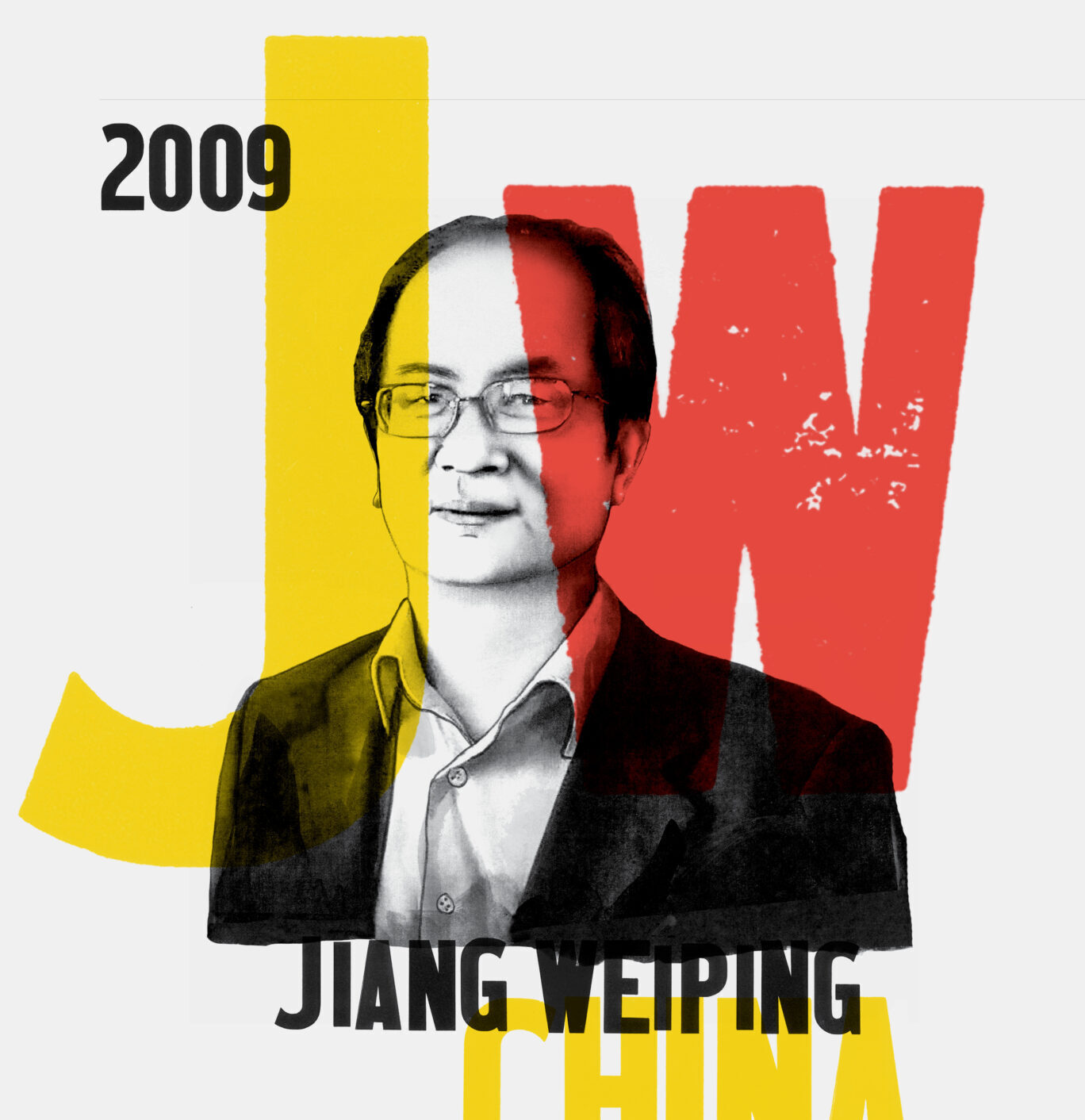
Jiang Weiping spent six years in prison for using his journalism to expose corruption among the Chinese ruling elite. He did not see his family for almost a decade, and lost everything, including any hope of a future in China. In a poem composed in his cell, Jiang wrote to his young daughter, then with his wife in Toronto:
I can’t help but shiver on these cold nights
but feel better knowing that your mother’s love
covers you like spring rain
The case of Jiang Weiping spanned a decade. Starting in the 1990s, the fearless journalist from the northeast, using the pen name Wen Qingtian, began to publish investigations into how unchecked power and wealth was corrupting officials. Foremost among these officials was Bo Xilai, then governor of Liaoning province and son of a legendary Communist party elder.
First detained in late 2000, likely at Bo’s behest, Jiang remained in prison, suffering torture and untreated illness, until January 2006. Years of sustained pressure from outside China may have helped shorten his sentence. Likewise the tireless efforts of his wife, Stella Li (her Chinese name is Li Yangling), first while still in China and enduring her own injustices, and then from Canada, where she sought refuge in 2004, along with their child.
PEN Canada assisted in securing permission for Jiang’s family to settle in Toronto, found them a little financial support, and then campaigned on his behalf. Some of the work was public, but much went on in back rooms, enlisting our government to lobby the Chinese to reunite him with his loved ones. Jiang remained under house arrest after his release, scraping by as a calligrapher and denied a passport. Again, PEN Canada did what it could, creating the One Humanity Award and getting the prize money to him in China.
Not until 2009 was he allowed to go into exile. He finally joined his family in Toronto that year, again with the quiet aid of PEN Canada. An email sent to PEN staff celebrated the conclusion of a long, difficult but ultimately successful campaign: “Jiang Weiping left at dawn this morning and should be in Toronto by midnight.”
No surprise to any of us who admired Jiang Weiping from afar and then got to know him in Toronto, the decade of forced silence did not put him off. Once settled in Canada, he resumed his journalism, mostly for online publications in Hong Kong. His investigative work between 2010 and 2012, once more focused on Bo Xilai, lately made a member of the national politburo and chief secretary of Chongqing, the enormous city in Sichuan, was widely credited with playing a part in forcing Bo from office. Bo Xilai wound up sentenced to life in prison in 2013.
Continuing to expose corruption from an apartment in Toronto didn’t spare Jiang Weiping being harassed, his home computer frequently hacked. Dissidents outside China faced — and continue to face — repression at the hands of their own government, and few transnational voices of conscience had proven as effective as this solitary journalist. Luckily, that original pen name of Wen Qingtian identified an indomitable spirit. “Qingtian,” meaning a clear sky in Mandarin, is also used to describe an upright and honest official. Until his death in 2025, Jiang Weiping remained that official in exile, loyal to his principles, and to the truth.

Edited by Sarmishta Subramanian
Design: soapboxdesign.com
Illustrations: tarahardyillustration.com
Contributors include José Teodoro, Charlie Foran, Adnan Khan, and Rui Umezawa, with reflections from previous presidents Margaret Atwood, Marian Botsford Fraser, Randy Boyagoda, Haroon Siddiqui, and Grace Westcott.
Read the full report.


Subscribe for updates about PEN Canada’s work to defend free expression.