1990s: the case of Eli Langer
July 2, 2026 | José Teodoro

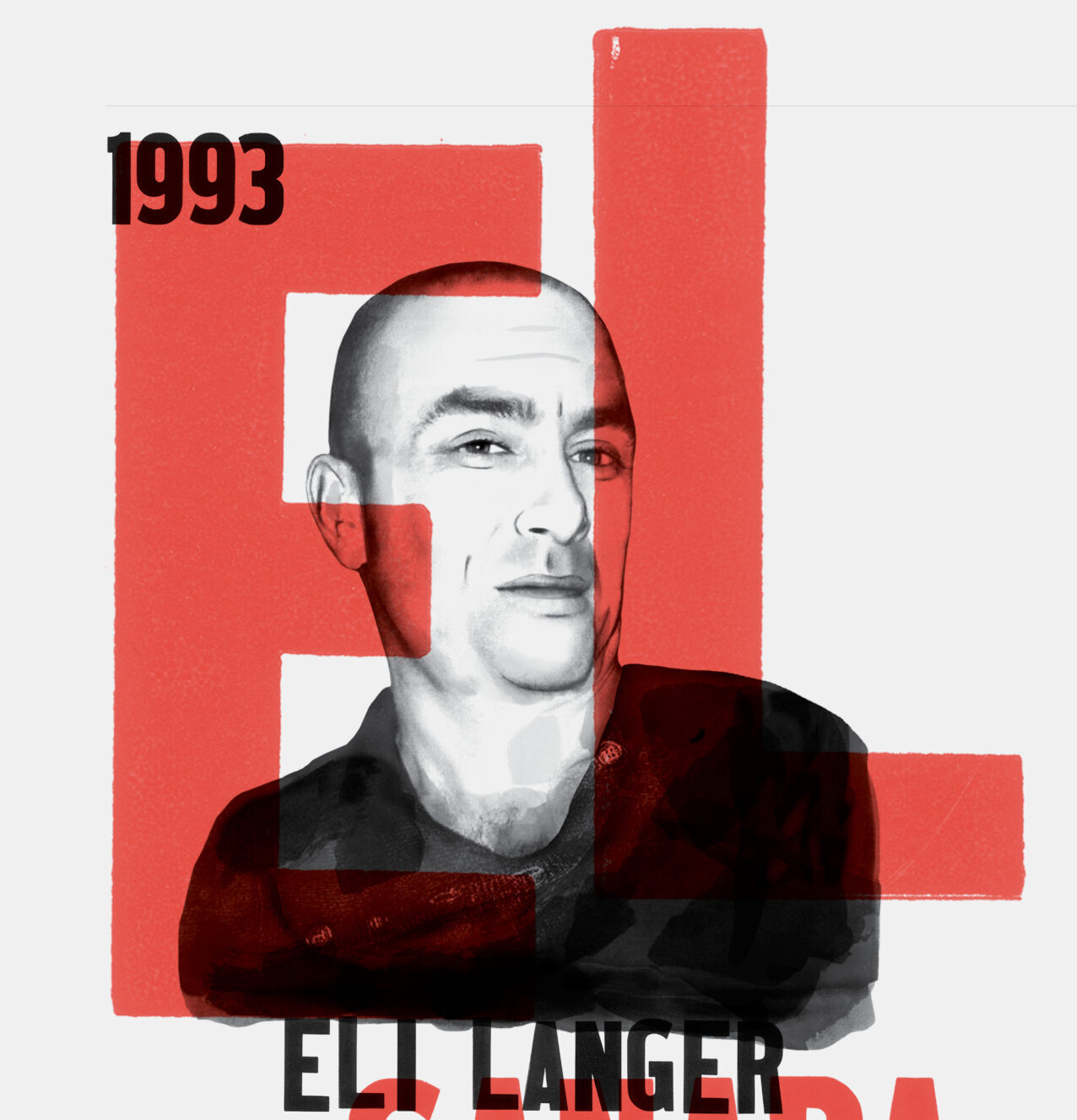
This piece was originally published in the 2025/2026 PEN Canada Annual Report. José Teodoro’s prose has appeared in publications such as Brick, Geist, and The Literary Review of Canada. He is the award-winning author of numerous works for the stage, as well as the book Nothing But Time: Conversations with Peter Mettler on Life and Cinema.
The synchronicity was so perfect you could be forgiven for believing it was planned this way. On August 1, 1993, section 163.1 to the Canadian Criminal Code came into effect — a parting gift from the outgoing Conservative government — making it a crime to own, make, exhibit, or sell any item depicting sexual activities involving persons under 18. Four months later, Toronto artist-run gallery Mercer Union mounted an exhibition of eight paintings and 50 drawings with renderings of adults and children undertaking sexual acts, such as masturbation, fellatio, and sodomy.
The works were by 26-year-old Eli Langer, who soon became a lightning rod for controversy around pornography, obscenity, and artistic freedom. On December 16, the Toronto Metropolitan Police’s Morality Bureau seized most of the paintings and drawings. Langer and Mercer Union’s director were arrested, though the charges were later dropped. It was ultimately the works themselves that were put on trial.
“[Langer’s] images are largely informed by intuitive personal and social drives, exploring the phenomenon of intimacy where it exists without the compensation of social or cultural consent,” Mercer Union’s curatorial statement read. “Langer often boldly develops a sexual ambiguity that inadvertently addresses our cultural taboos and the formation of morality.” Following his arrest, Langer said, “I did nothing more than accept my responsibility as an artist to provoke a dialogue.”
Section 163.1 makes exemptions for “artistic merit,” a slippery criterion that surrendered Langer’s work to the sympathies of peers and appointed experts. Considering Langer’s subject matter, it was not a given that the community would come to his defence — but come it did. Supportive testimonies were provided by venerated fellow artists such as Michael Snow and Ron Bloore, who appeared as a witness for the Crown — only to turn on prosecutors and provide an impassioned defense of Langer’s work. He regarded the trial as an opportunity to seek vicarious justice for his spouse, gallerist Dorothy Cameron, who was convicted of exhibiting obscene drawings in 1965.
Meanwhile, PEN members unanimously adopted a resolution to support Langer, and PEN Canada, under the stewardship of John Ralston Saul, intervened on Langer’s behalf in court. Langer’s representation argued that because no children were involved in the production of the works, forged as they were from Langer’s imagination, they should be absolved of any criminality. The judge, convinced of their artistic merit, ruled that the works posed no threat to minors. The pieces were returned, the gallery remounted the exhibition, and Langer went on to show his work internationally and to find employment as an instructor at UCLA.
There’s a way in which the Langer case seems quaint in retrospect, the product of the same era of censorious culture wars in which the Parents Music Resource Center was affixing hip-hop and heavy metal CDs with warning labels (which served as a boon to sales). On the other hand, the intervening years have seen freedom of speech shift from its status as a predominantly left-wing issue to one taken up with special vehemence by the right, and the question of leniency with regards to acknowledging child sexuality has arguably never been more contentious: decades after first drawing fire, American artist Sally Mann, for one, continues to have her work scrutinized for its ostensibly eroticized images of children. With the internet metastasizing with AI deepfakes, and questions forced by the revelation of Jeffrey Epstein’s vast predatory network, it’s daunting to hypothesize how Langer’s case would play out today.
Edited by Sarmishta Subramanian
Design: soapboxdesign.com
Illustrations: tarahardyillustration.com
Contributors include José Teodoro, Charlie Foran, Adnan Khan, and Rui Umezawa, with reflections from previous presidents Margaret Atwood, Marian Botsford Fraser, Randy Boyagoda, Haroon Siddiqui, and Grace Westcott.
Read the full report.


Subscribe for updates about PEN Canada’s work to defend free expression.